Historical Context
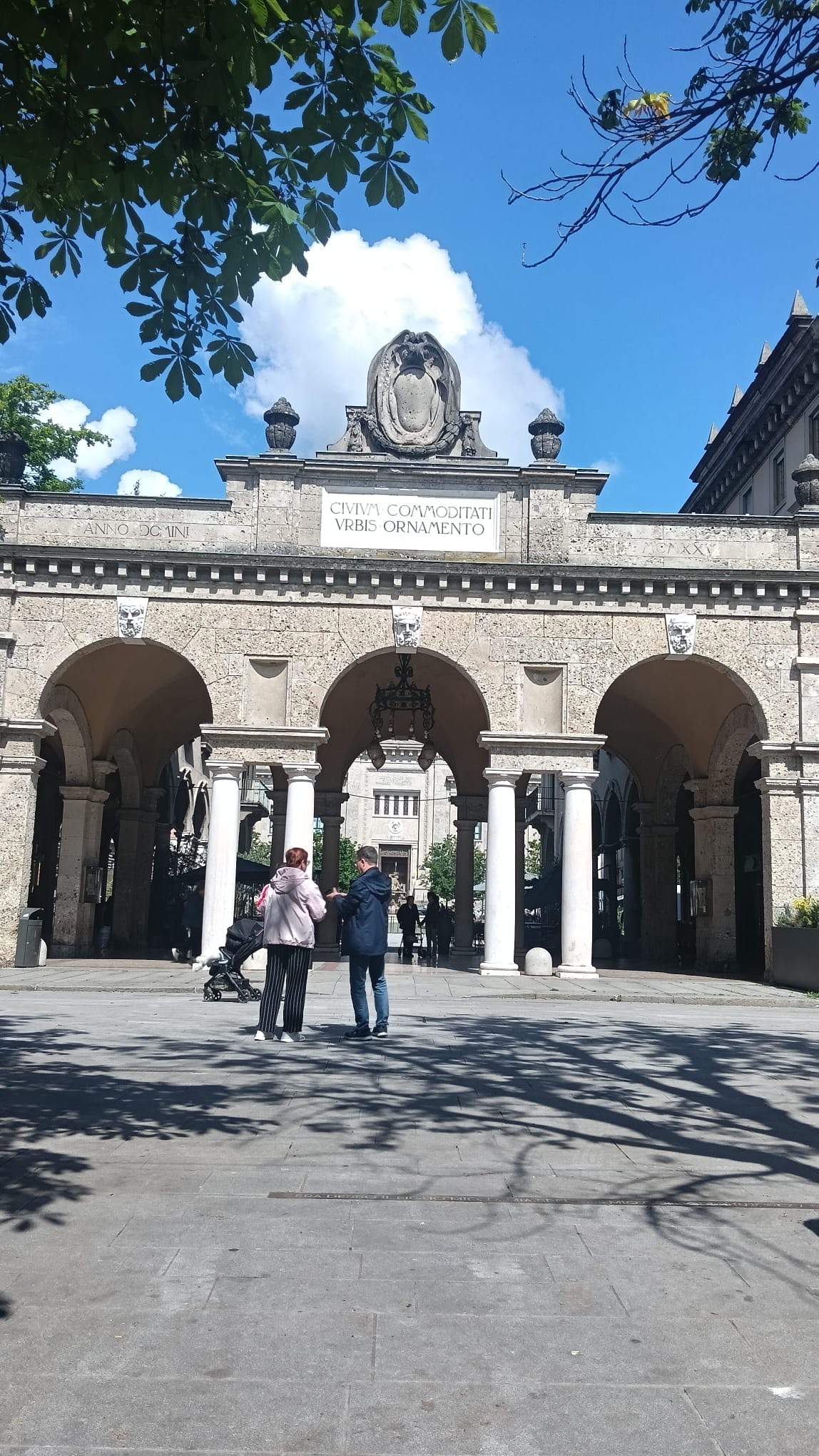
Continuing along via T. Tasso, we arrive at Piazza Vittorio Veneto, where the Employment Offices are located.
Public bodies responsible for managing the hiring of workers. During Fascism they became instruments of political control, through which the regime decided who was allowed to work.
During the Italian Social Republic (RSI), these offices took on a central role in reinforcing Fascist control over the economic and social life of the country. Several offices were established here for the management and deployment of labour, with the aim of ensuring that hiring took place according to Fascist criteria and that workers were aligned with the ideals of the regime. Many workers were sent to Germany as labour, officially on a voluntary basis, but often in reality under pressures or obligations imposed by the regime. They were employed mainly in labour camps and industries, not in concentration camps, although conditions were nonetheless extremely harsh.
In addition to the employment offices, the General Labour Inspectorate also operated in this area, a body established and run by the Italian Social Republic.
The Italian Social Republic, founded at Salò following the armistice of 8 September 1943 and led by Benito Mussolini, supported the Nazi occupation in northern Italy between 1943 and 1945.
🎧 Audio Reading
Why It Is a Place of Memory
Fascist control over workplaces was not limited to bureaucratic organisation, but also translated into discrimination against those who did not follow the regime. From 29 March 1928 onwards, Fascism began to intervene directly in the workplace through a Royal Decree, which established that hiring should give preference to those in possession of the membership card of the National Fascist Party (PNF). The law not only introduced an ideological selection process, but contributed to excluding from employment those who were not loyal to the regime.
A measure issued by the king on the proposal of the Fascist government that introduced direct state intervention in employment relations, favouring workers enrolled in the party.
A document certifying membership of the Fascist party, often indispensable for obtaining or keeping a job and for accessing public positions.
🎧 Audio Reading
Multimedia Content
In Depth – The General Labour Inspectorate
The General Labour Inspectorate had two main tasks:
The first was to replace conscripted workers with voluntary labour. The Inspectorate sought to limit the direct use of coercion by offering "voluntary" labour in place of requisitioned workers. However, this voluntariness was often merely apparent, since many accepted out of necessity, fear of reprisals or to avoid deportation.
The German authorities imposed conscription (precettazione), meaning the obligation to report for forced labour with no possibility of refusal.
Compulsion or overpowering that forces someone to act against their own will.
The second objective was direct collaboration with the German authorities for the execution of infrastructural and strategic works, such as the construction and repair of roads, bridges and railways, as well as other civil and military projects that were fundamental to the war effort and the control of the territory.
Operating in this context was also the Organisation Todt, a German organisation responsible for the construction of large military and infrastructural works, active in occupied territories during the war. In the province of Bergamo, the Todt conscripted 6,848 workers, but only 146 actually reported; of these, 13 were sent to work in Germany.
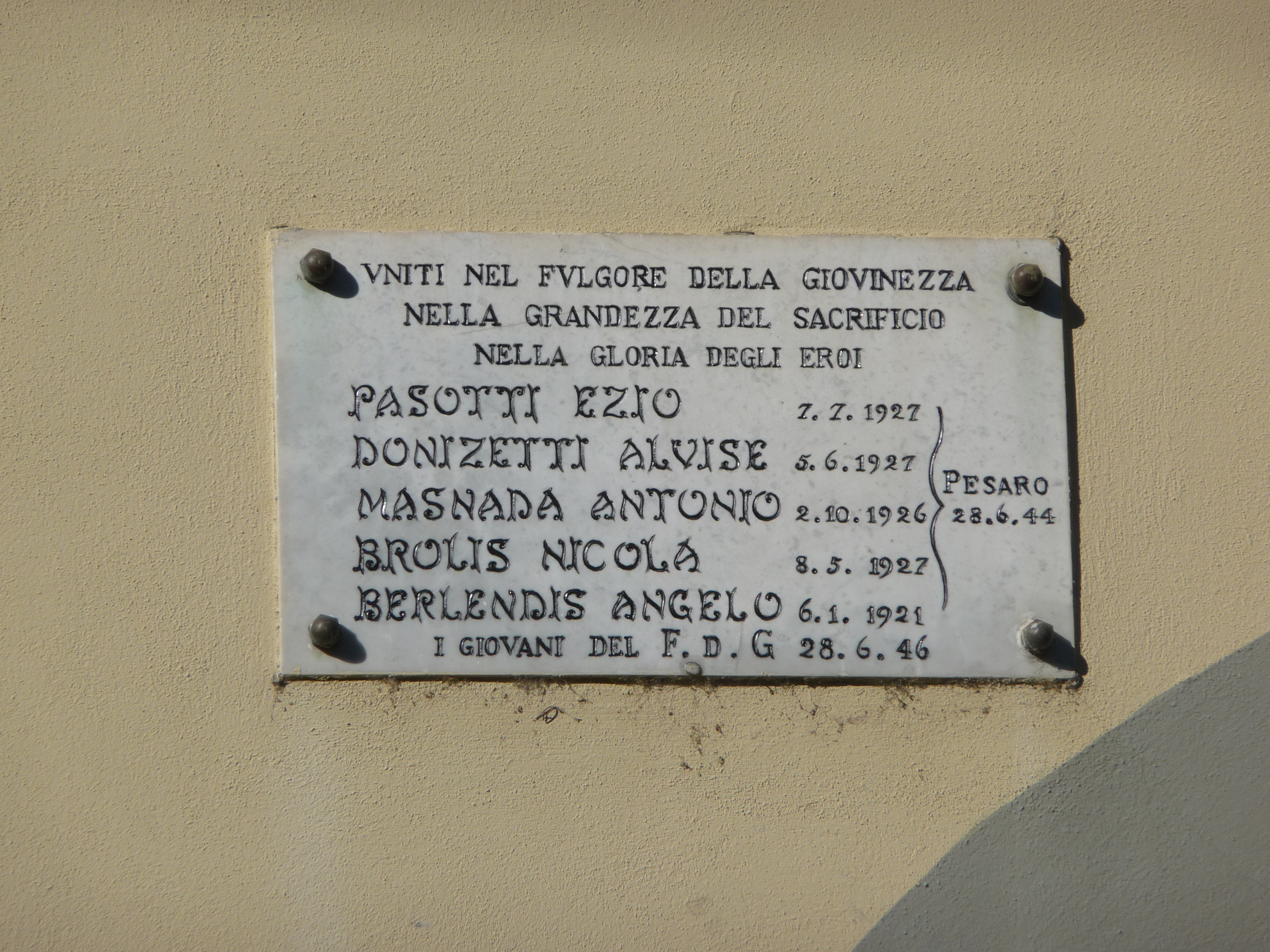
The harshness of the repression is still recalled today by a plaque located in via Porta Dipinta, in Bergamo, which commemorates five citizens from Bergamo who were shot at Pesaro, victims of the violence and reprisals linked to the system of occupation and collaboration.
🎧 Audio Reading
Sources
Bibliographic Sources
- Mario Pelliccioli, Itinerari di memoria. Un percorso a Bergamo tra fascismo, occupazione tedesca e Resistenza, Moltefedi Achille Grandi Editore, Bergamo 2023
- Brunello Mantelli, Tante braccia per il Reich! Il reclutamento di manodopera coatta nell'Italia occupata 1943-1945, Mursia, Milan 2019
- Enzo Collotti, Renato Sandri, Frediano Sessi (eds.), Organizzazione Todt, in Dizionario della Resistenza, vol. I, Storia e geografia della Liberazione, Einaudi, Turin 2000
Multimedia Sources
- Normattiva: the portal of current legislation, Presidency of the Council of Ministers — Royal Decree of 29 March 1928, no. 1003
- Image 1: Photographic archive of the project, class 5IG Itis P. Paleocapa
- Image 2: MEMO, ANPI