Historical Context
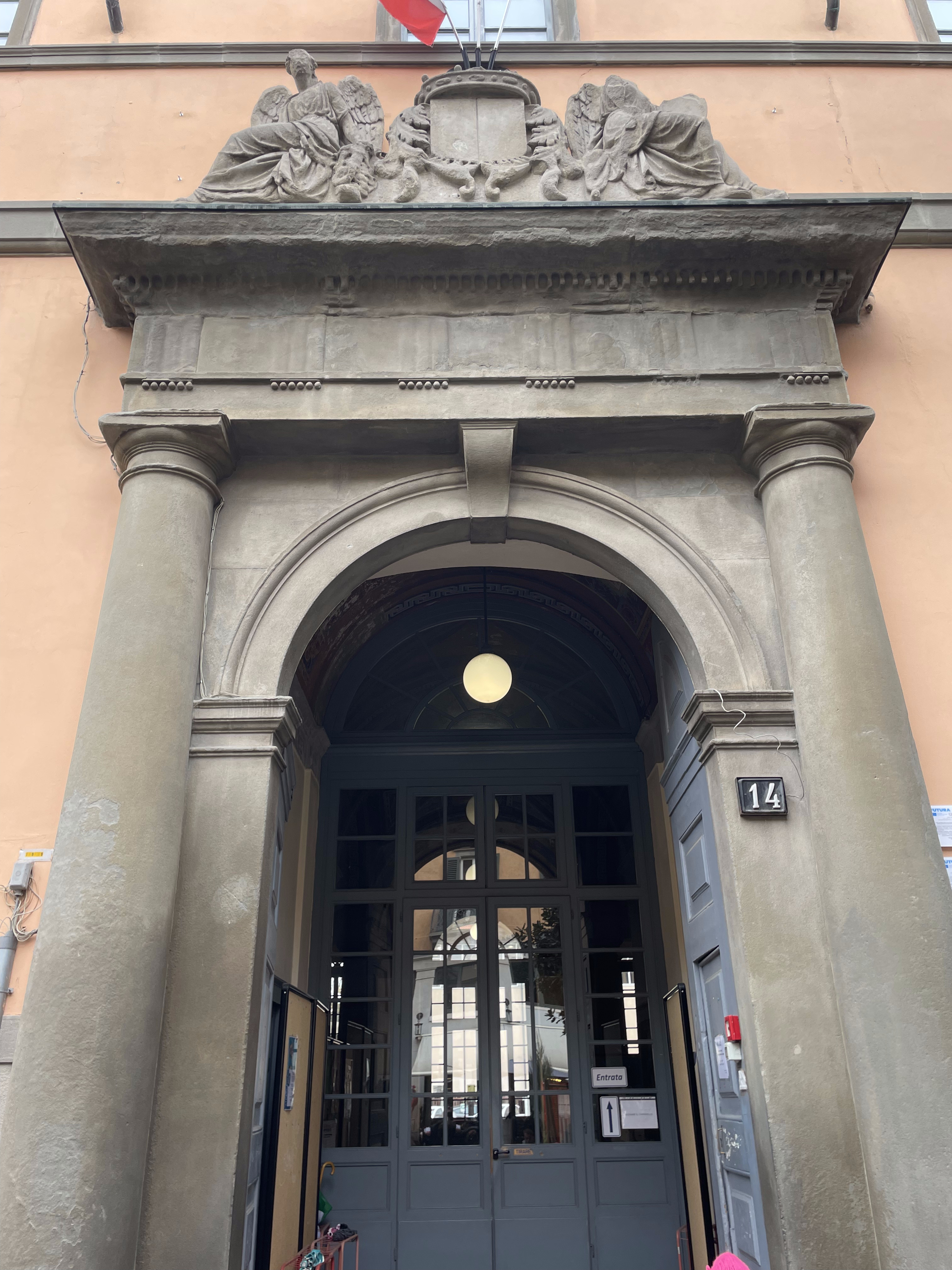
We are at via Torquato Tasso 14, where today the "Eugenio Donadoni" Middle School stands. During the Italian Social Republic (1943–1945), this building was not a school: it housed a GIL (Gioventù Italiana del Littorio) unit and a nucleus of the Women's Auxiliary Service (SAF), the RSI's voluntary female corps. The main command was headquartered in the Casa del Fascio. The young volunteers were trained to carry out with competence and discipline the tasks of assistance, logistics and front-line support that they would later perform. This only came about after 8 September 1943 and the founding of the RSI. Before that, the role assigned to young women was in keeping with the Fascist vision of women's place in society.
The SAF was officially established by Decree no. 447 of 18 April 1944, in the period following the Armistice of 8 September 1943. In the Bergamo area, the SAF counted around 130 volunteers — Italian women between the ages of 18 and 40. The women of the Women's Auxiliary Service were not intended for direct combat: their role was to work alongside the military structures of the Italian Social Republic. They provided assistance in hospitals, carried out office and secretarial work at command posts, engaged in propaganda activities and performed logistical tasks such as supplying troops. Through these assignments, the regime aimed to sustain the war effort and free up men to be deployed at the front. It is important to note that, within the traditional ideology of the Fascist regime, women were initially neither admitted to the armed forces nor considered suitable for military service. Fascist ideology exalted the female figure as the "angel of the hearth" — a devoted mother and wife, keeper of the home and responsible for raising children according to the values of the regime. Women were expected to contribute to the greatness of the nation above all through motherhood and moral support for the fighting man. The entry of women into the Women's Auxiliary Service therefore took place in a context of emergency. After 8 September 1943, with the founding of the Italian Social Republic and the severe shortage of men caused by the war and desertions, the Salò regime was forced to partly revise its traditional model. Female enlistment responded to the practical need to replace men in logistical and administrative services, making it possible to send as many men as possible to the front. In this way, while formally maintaining women's subordination to male military personnel and their exclusion from armed combat, the regime temporarily expanded women's public role out of wartime necessity.
🎧 Audio Reading
Why It Is a Place of Memory
This place bears witness to the adhesion of many young women to the Fascist myth of the female auxiliary, driven by loyalty to the regime and love of country, but also in part by the desire to step outside traditional female roles. After completing their training courses, they took an oath according to the formulas of the Republican armed forces and, though they did not fight with weapons, were considered militarised personnel with the status of war volunteers. National participation was significant: between May 1944 and April 1945, 5,771 applications were recorded, with 1,016 active auxiliaries in July 1944 and a total of 4,412 volunteers before disbandment. The uniform consisted of a long skirt, military jacket and beret bearing a symbol composed of the fasces. A coat and long stockings completed the uniform; discipline required rigour, respect for hierarchy and comradeship.
The central emblem of the Fascist regime, borrowed from ancient Rome, where lictors carried it before magistrates as a symbol of authority and power. During Fascism, the fasces were used everywhere: on flags, public buildings, uniforms and official documents, evoking discipline, order and loyalty to the State. Combined with the military elements on the auxiliaries' beret, it symbolised the authority of the regime and the bond between citizen and State.
🎧 Audio Reading
Multimedia Content
In Depth: Lydia Gelmi Cattaneo
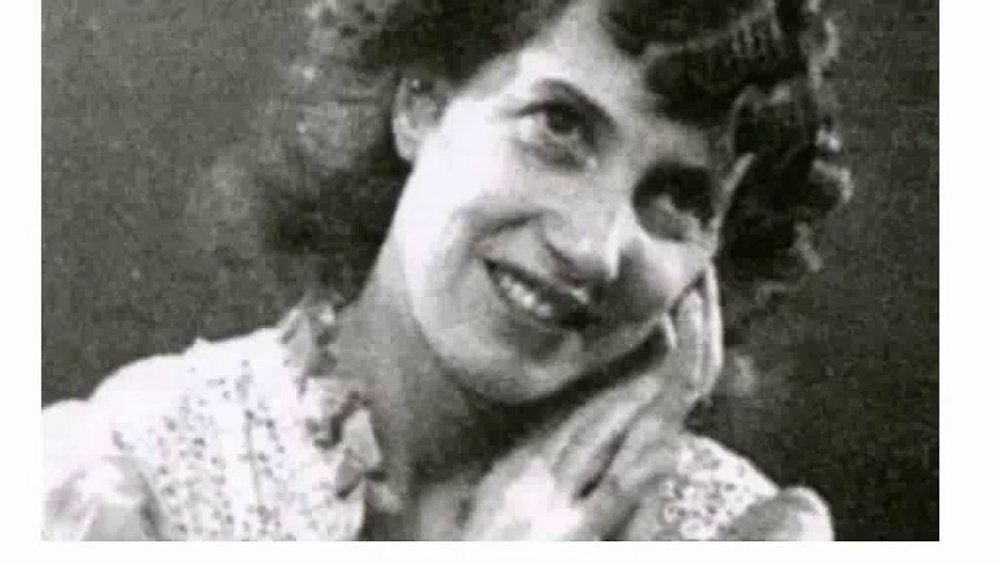
Lydia Gelmi Cattaneo was born in Presezzo in 1902 and lived at the Castello di Valverde. The daughter of a medical officer, a woman of wide cultural interests, a miniaturist and one of the first women in Bergamo to obtain a driving licence, she distinguished herself through courage and generosity. During the Second World War, between 1943 and 1945, she saved numerous Jewish people — among them Irene Weiss — by hiding and protecting them from the Nazi-Fascists. She also helped partisans and escaped prisoners, risking her own life to defend those who were being persecuted. For her commitment she was the first woman from Bergamo to be awarded the title of "Righteous Among the Nations", the recognition given to those who save human lives at risk to their own. Her life remains an example of courage, humanity and civic responsibility for all of humanity.
🎧 Audio Reading
Sources
Bibliographic Sources
- Mario Pelliccioli, Itinerari di memoria. Un percorso a Bergamo tra fascismo, occupazione tedesca e Resistenza, Cooperativa A. Grandi / Moltefedi, Bergamo 2023.
- Mirella Serri, Mussolini ha fatto tanto per le donne! Le radici fasciste del maschilismo italiano, Longanesi, Milan 2022.
- Victoria De Grazia, Le donne nel regime fascista, Marsilio, Venice 1993.
- Women's Auxiliary Service, Memorie in cammino.
- è l'idea che fa il coraggio. Prospettive femminili sulla Resistenza bergamasca , edited by Elisabetta Ruffini, ISREC Bergamo.
- 1919–1939. Lydia Gelmi Cattaneo, Mariateresa Pesenti, 26 January 2021, edited by the Ateneo di Scienze Lettere e Arti di Bergamo.
Multimedia Sources
- Image 1: Photographic archive of the project, class 5IG Itis P. Paleocapa
- Image 2: From the video 1919–1939. Lydia Gelmi Cattaneo, Mariateresa Pesenti, 26 January 2021, edited by the Ateneo di Scienze Lettere e Arti di Bergamo.