Historical Context
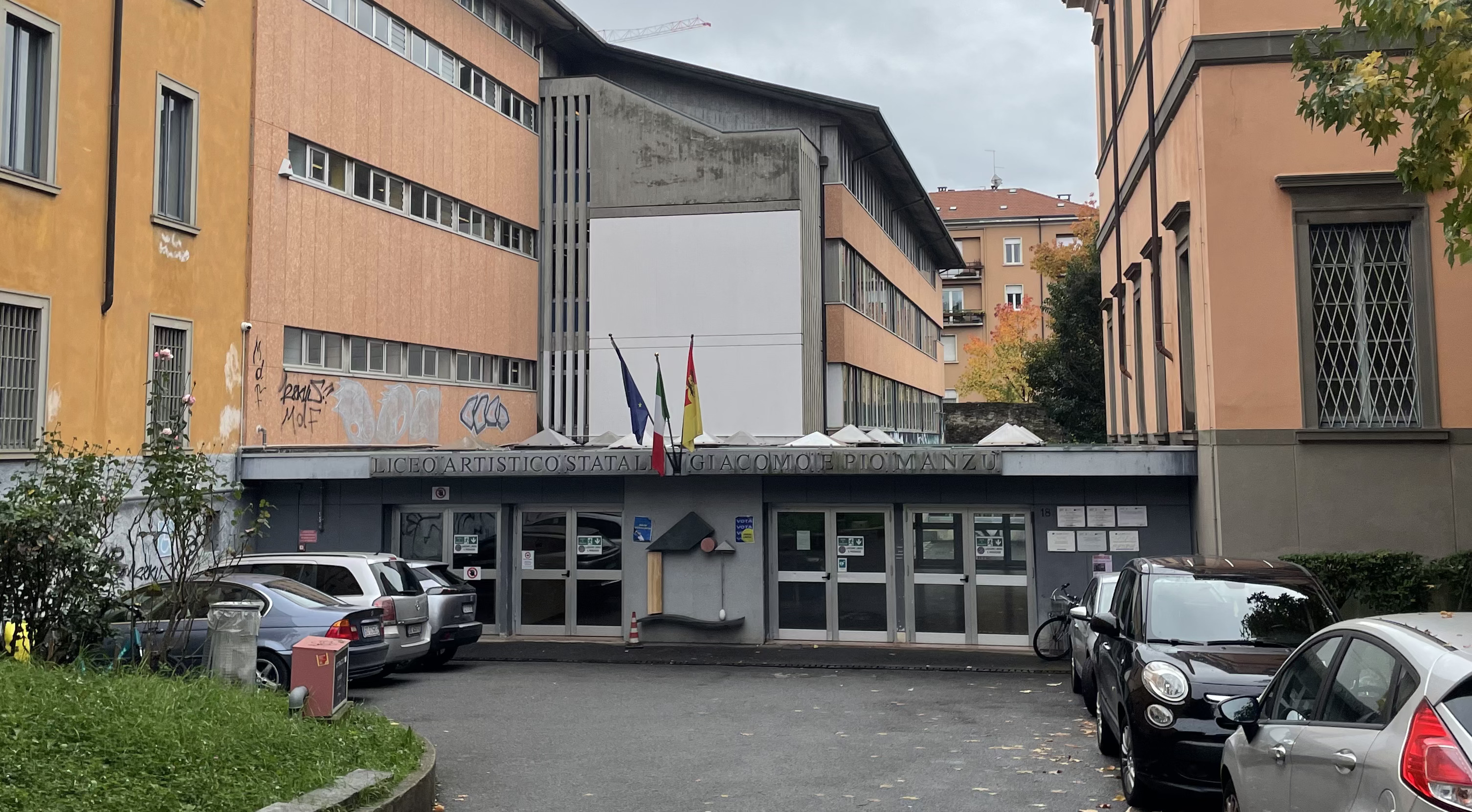
We are at via Torquato Tasso 18, where today the "Giacomo e Pio Manzù" State Art High School is located. A building formerly stood here that housed the offices of the Special Tribunal for the Defence of the State.
Establishment:
Created in 1926 by the Fascist regime following the "fascistissime laws", it became operational
in 1927 with the purpose of targeting political opponents and curtailing democratic freedoms.
It was abolished in 1943 and then reconstituted by the Italian Social Republic until the
Liberation.
Function:
It tried so-called "political crimes", including anti-Fascist activity, distribution of
clandestine press, membership of banned parties and offences against the regime. The defence
of the State was equated with the defence of Fascism.
Composition and trials:
It was composed largely of military personnel and members of the regime. Trials were swift,
offering defendants few guarantees and severe restrictions on defence and appeal. Verdicts
were often predetermined.
Sentences:
Punishments included imprisonment, internal exile, hard labour and, in some cases, the death
penalty. The consequences also extended to the social and professional lives of the accused.
Historical significance:
The Special Tribunal turned justice into an instrument of political repression. It is today
remembered as a symbol of the denial of the rule of law and as a warning about the dangers
of dictatorships.
The Special Tribunal was established by the Fascist regime on 25 November 1926 and became operational in 1927. After an initial suppression in July 1943, it was reconstituted by the Italian Social Republic and remained active until the Liberation, with a seat also in Bergamo.
During the 1930s the Special Tribunal took on an increasingly central role in the repressive apparatus of the Fascist regime. With the 1931 Extension, its jurisdiction was broadened: it was no longer limited to suppressing anti-Fascism, but intervened more broadly in the defence of the "personality of the State" and the security of the regime.
Its jurisdiction was expanded: the tribunal was no longer limited to suppressing anti-Fascism, but intervened more broadly in the defence of the personality of the State and the security of the regime.
Although it represented the judicial apex of political repression, the tribunal did not operate alone, but within a system composed of the Ministry of the Interior, the police, the Carabinieri and the Fascist Party, with frequent overlapping of jurisdictions. Within this system, the Special Tribunal performed above all a selective function: it tried the most serious and symbolically significant political crimes, while day-to-day control remained in the hands of the other state apparatuses.
🎧 Audio Reading
Why It Is a Place of Memory
The Special Tribunal represents one of the most repressive instruments of the Fascist dictatorship. Established after the introduction of the "fascistissime laws", it served to strike down every form of political opposition, eliminating fundamental freedoms such as freedom of the press, freedom of association and the right to strike.
Trials were swift and devoid of guarantees: defendants often did not know the charges against them, could not appeal and could be sentenced to death. Verdicts were frequently predetermined, making the Tribunal an instrument of fear and control.
🎧 Audio Reading
Multimedia Content
.jpg)
In Depth: After the Liberation
After the fall of Fascism and the end of the Second World War, places such as this one lost their repressive function. In the climate of democratic reconstruction of republican Italy, the building was converted to educational use, becoming the home of the Art High School, founded in the early 1960s. The choice to transform a place associated with control and repression into a school reflected the desire to return these spaces to the community and to affirm new values grounded in education, culture and freedom. The subsequent dedication to Giacomo and Pio Manzù strengthens the symbolic significance of this transition: from the seat of a tribunal that suppressed thought to a place devoted to creativity and artistic expression. Today, studying in that building means inhabiting a space that tells the story of Italy's journey from dictatorship to democracy, transforming a place of repression into a place of education and freedom.
🎧 Audio Reading
Sources
Bibliographic Sources
- Mario Pelliccioli, Itinerari di memoria. Un percorso a Bergamo tra fascismo, occupazione tedesca e Resistenza, Moltefedi Achille Grandi Editore, Bergamo 2023
- Mimmo Franzinelli, Il tribunale del Duce, Mondadori, 2017
- Leonardo Pompeo D'Alessandro, Giustizia fascista. Storia del Tribunale Speciale (1926-1943), Il Mulino, 2020
Multimedia Sources
- Image 1: Photographic archive of the project, class 5IG Itis P. Paleocapa
- Image 2: GI DI ENNE, Autorità in arrivo in via Tasso, Raccolta Domenico Lucchetti, Fondo famiglia Giovannelli De Noris, Museo delle storie di Bergamo, Archivio fotografico Sestini