Historical context
We are in the Matris Domini monastery in Bergamo, at the foot of the hill of Città Alta, along the ancient route leading to the historic city. This cloistered place was transformed into a Nazi military prison in the spring of 1944. During the German occupation (1943–1945), the SS requisitioned part of the convent, confining the nuns and setting up cells for prisoners awaiting trial or deportation. Among those imprisoned here was Don Agostino Vismara, a military chaplain unjustly accused of arms trafficking for the Resistance. The monastery became a place of detention but also of silent resistance: from nearby houses, such as that of the Leidi family, signals of comfort and hope were sent to the prisoners by waving flags to communicate news. This place symbolizes the dual nature of the occupation: the violence of Nazi-fascist arbitrariness and the tenacious network of civil and religious solidarity that tried to oppose it.
Why it is a place of memory
The Matris Domini monastery is a place of memory because it embodies the forced transformation of a space of spirituality into one of repression, while still preserving a subtle human resistance. Remembering this place means honoring not only the suffering of the detainees, but also the courage of a community that, despite the occupation, found ways to support prisoners through extraordinary acts of solidarity, such as signals from the windows. The story of Don Agostino Vismara, suspended between the hope of a trial that was never held and the constant threat of deportation, speaks to us of the arbitrariness of power and the vulnerability of rights. Today, this site reminds us that even in the darkest moments, human dignity can be defended through silent support and the cohesion of a community—fundamental values for a civil and democratic society.
Multimedia content
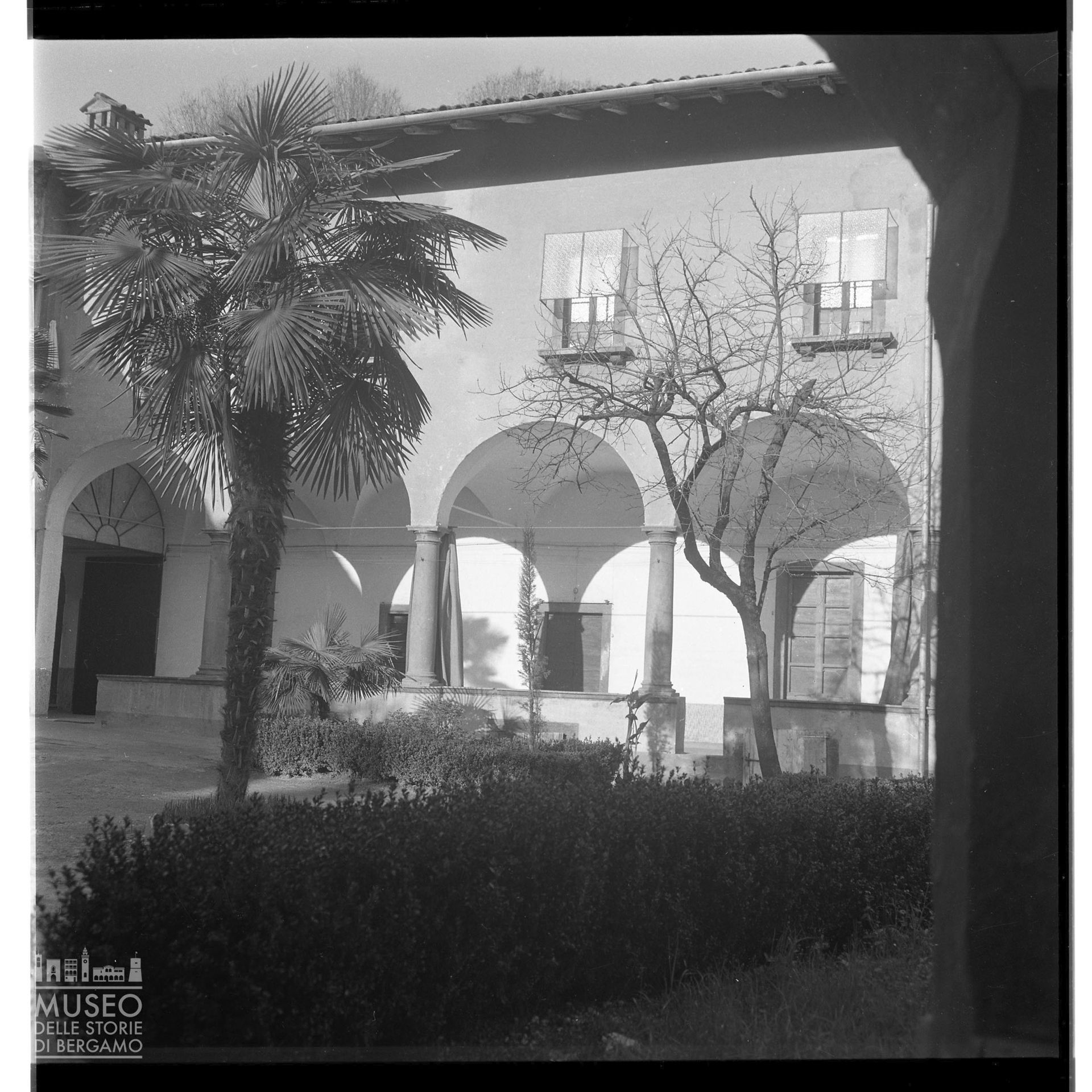
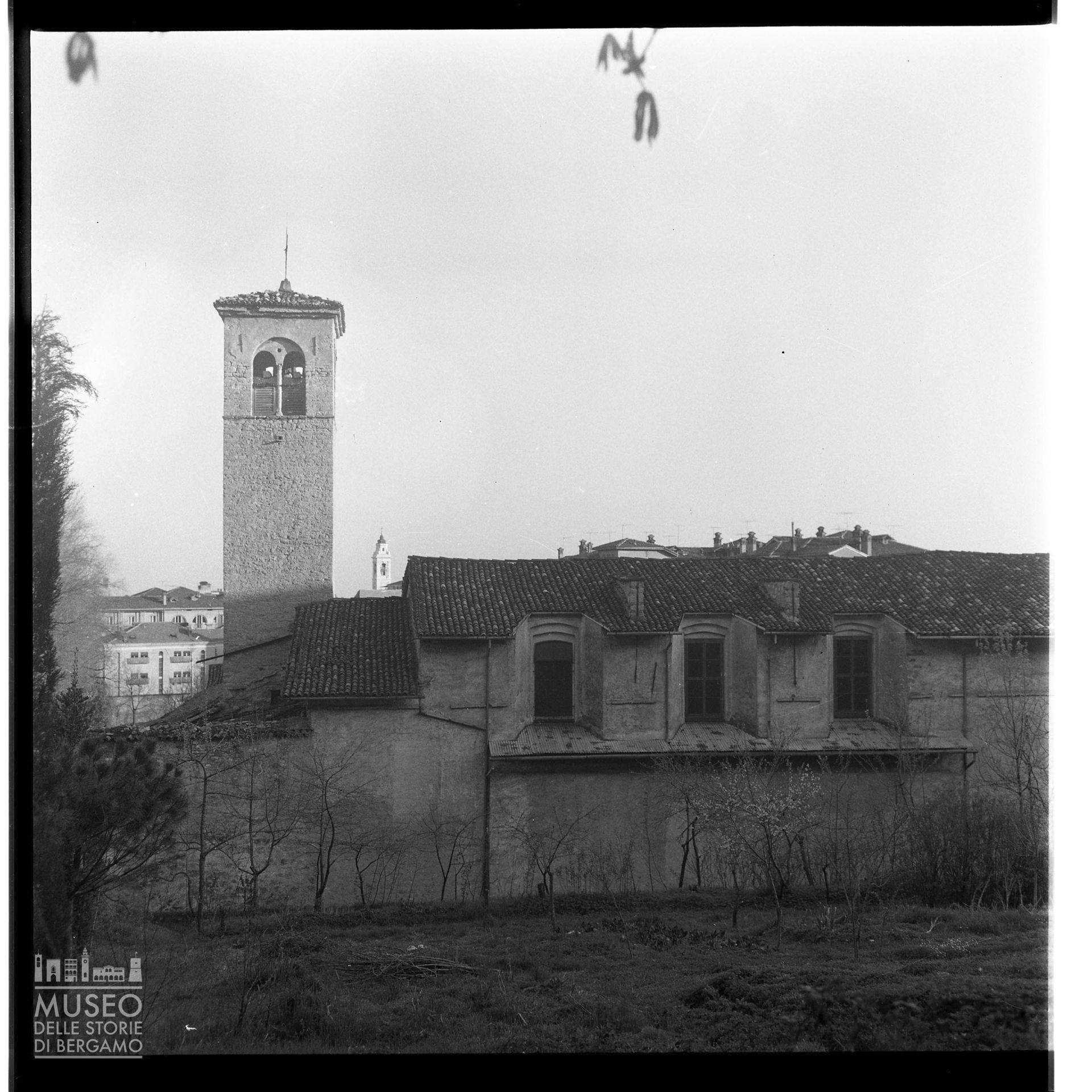
Don Agostino Vismara at Matris Domini
In May 1944, Don Agostino Vismara was transferred to the German prison at Matris Domini in Bergamo, where he
was held under German control while awaiting a trial that would never take place. His imprisonment occurred in
a context of suspended legality and strong political repression.
Documentation preserves evidence of censored correspondence, translated into German by the authorities,
and letters that were secretly sent out of the prison, showing attempts to maintain contact with the outside
world. There are also self-defense notes written during the wait for trial.
After Matris Domini, Vismara was transferred to San Vittore and later deported to the camps of
Mauthausen and Dachau. The Matris Domini prison thus represents a crucial stage in the path from detention to
deportation.
Sources
Bibliographic sources
- Mario Pelliccioli, Itinerari di memoria. Un percorso a Bergamo tra fascismo, occupazione tedesca e Resistenza, Moltefedi Achille Grandi Editore, Bergamo 2023
- Barbara Curtarelli, A Matris Domini, 10 May 1944 - 2 October 1944, in Don Agostino Vismara, Noi Abbiamo Sofferto, Glossa, Milan 2021
- Vanni Zanella, Rosalba Tardito and Luigi Pagnoni, The Matris Domini Monastery in Bergamo, Edizioni Monumenta Bergomensia, Bergamo 1980
- Bertacchi G., Buttarelli A., Vismara L. (eds.), The papers of a life. The Don Agostino Vismara archive, Bergamo, ISREC, Il filo d'Arianna, 1994
Multimedia sources
- Image 1: Fausto Asperti, Matris Domini Monastery, Fausto Asperti Collection, Foto Express, Museum of Bergamo Stories, Sestini Photo Archive
- Image 2: Fausto Asperti, Matris Domini Monastery, Fausto Asperti Collection, Foto Express, Museum of Bergamo Stories, Sestini Photo Archive