Historical Context
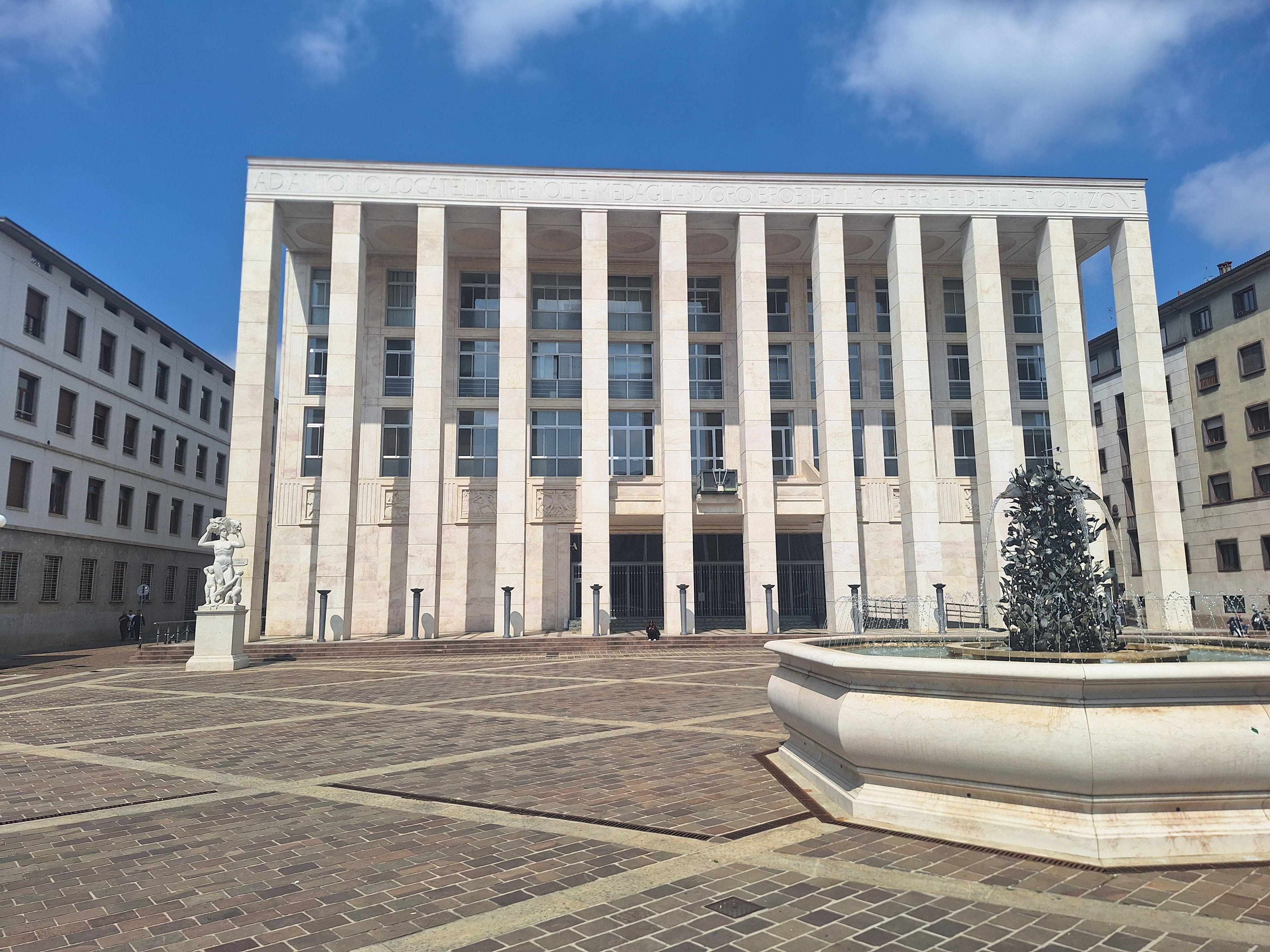
We are standing in front of Palazzo della Libertà, a building with an architectural structure organized according to principles of rationality and symmetry, typical of the fascist period. Built between 1937 and 1940 based on a design by Alziro Bergonzo, it was originally the Casa del Fascio, the headquarters of the National Fascist Party. This building did not only serve an administrative function, but also represented the center of local political power and was a tool of regime propaganda, designed to make the authority of the State visible in the daily lives of citizens. Inside were the offices of the Federal Secretary, the political secretariat, and the assembly hall (now an auditorium).
During the final phase of the Second World War and the Italian Social Republic, the basement of the building was also used as a detention site. After 1945, it was renamed Palazzo della Libertà, marking the transition from dictatorship to democracy and temporarily hosting the local CLN.
Offices of the Federal Secretary:
These were the offices of the provincial leader of the National Fascist Party. The Federal Secretary was
the most important party figure at the provincial level: he represented fascist power locally and was
responsible for controlling local politics, organizing propaganda, and coordinating all party activities.
🎧 Audio Reading
Why it is a place of memory
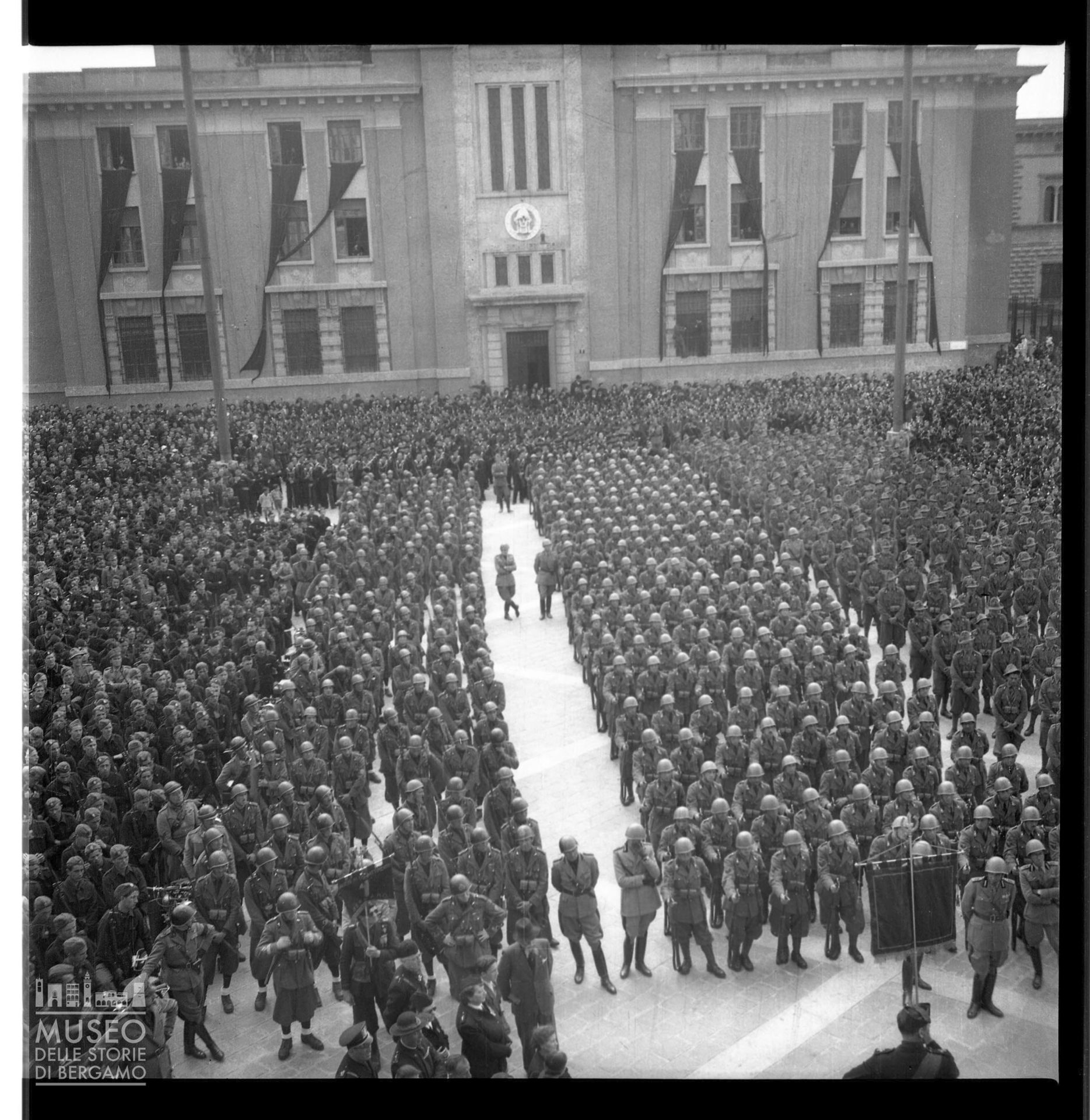
Palazzo della Libertà represents a layered place of memory, as it preserves material and symbolic traces of different phases of 20th-century Italian history. During the fascist period, it represented the “home” of the regime and thus a space of repression, also emphasized by celebratory inscriptions and decorative elements that helped build consensus and shape collective memory. The dedication to Antonio Locatelli, described as “three-time gold medalist,” and the presence of ritual spaces such as the shrine and the assembly hall reinforced the symbolic and almost sacred dimension of political power.
The change of name and function after the war did not erase the material traces of the past but reversed their meaning: from a symbol of oppression to a sign of the democratic reclaiming of spaces of power.
Today, the building invites critical reflection on the relationship between architecture, power, and memory, showing how places are never neutral but carry political and civic values that can be reinterpreted over time.
🎧 Audio Reading
Multimedia Content
In-depth: architectural notes
Palazzo della Libertà, now protected as a site of historical and artistic interest, features a rationalist and monumental architectural style, with simple yet imposing forms designed to convey order, strength, and authority. Architecture becomes a tool of propaganda, capable of transmitting the regime’s values even without words. The façade is characterized by a large portico with pillars and a balcony used for public speeches, allowing direct contact between power and the population and carrying strong symbolic meaning.
The square in front of the building is also an integral part of the project: it is not just an urban space, but a place designed for rallies and public events, where the direct relationship between power and the masses is realized. This reflects a typical conception of the period, in which the city is transformed into a stage for political representation.
Decorations, both internal and external, such as frescoes, sculptures, and bas-reliefs, have an ideological function, as they promote values such as courage, sacrifice, and national belonging. In this way, architecture, art, and urban space work together to create a coherent system of power communication.
🎧 Audio Reading
Sources
Bibliographic sources
- Mario Pelliccioli, Memory itineraries. A route in Bergamo through fascism, German occupation and Resistance, Bergamo 2023
- Lombardy Region, Lombardia Beni Culturali – Palazzo della Libertà (ex Casa del Fascio), online database, Bergamo 2014
- Palazzo della Libertà, what future?, Prima Bergamo, 2016
- Palazzo della Libertà, Wikipedia
- Palazzo or Casa della Libertà, Visit Bergamo
Multimedia sources
- Image 1: Project photographic archive, class 5IG Itis P. Paleocapa
- Image 2: Dante Anghileri, gathering in Piazza Littorio, Museo delle storie di Bergamo