Historical context
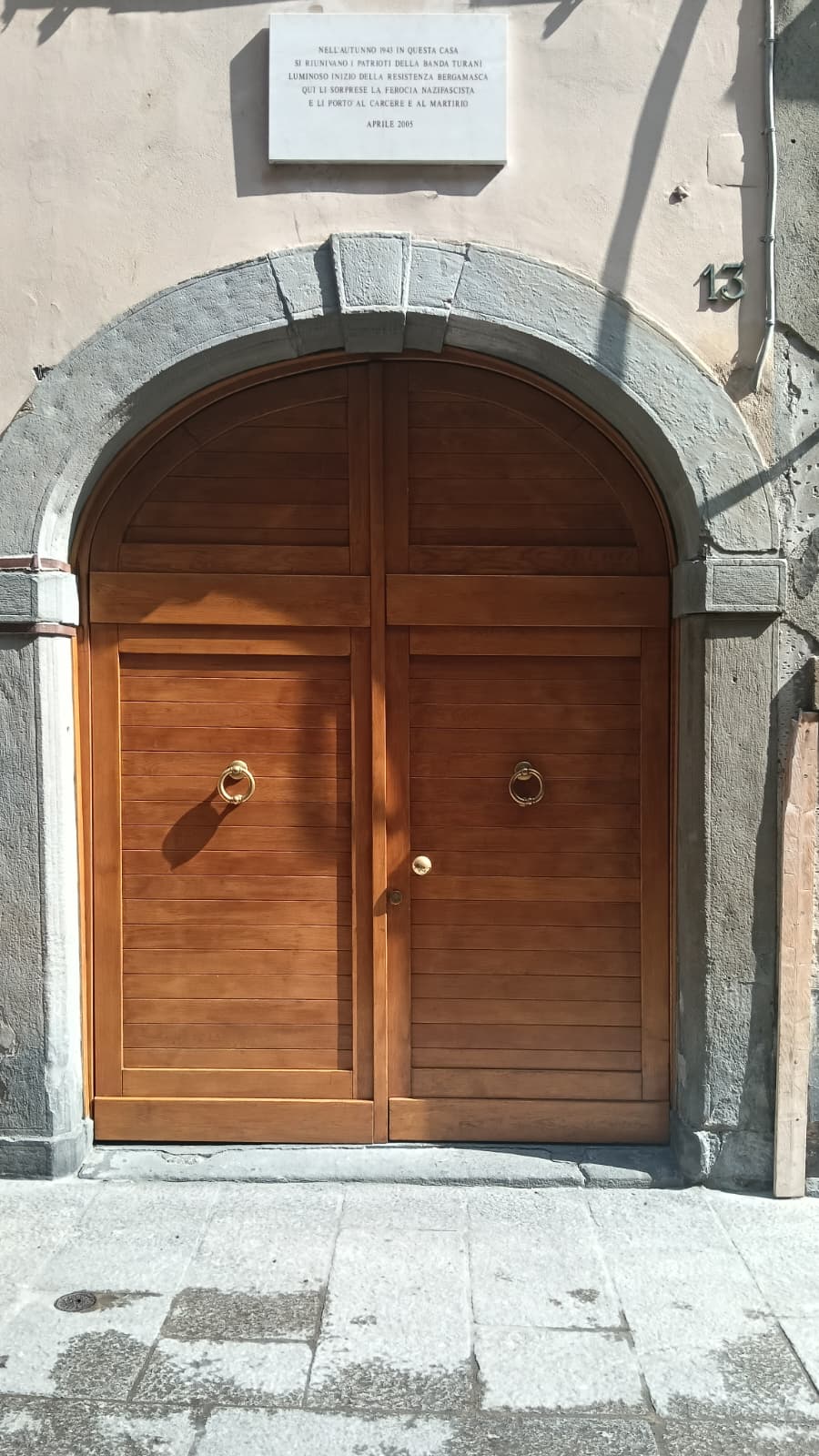
We are in Via Pignolo 13: not just a simple street address in the city, but one of the operational centers of the Resistance in Bergamo. In these buildings, among hidden courtyards and basements, the lives of those who had chosen to oppose the regime intersected, such as the members of the Turani Group. After 8 September 1943, the city became a maze of spies and informants: a single whispered word to the wrong person was enough to end up in the hands of the Fascist Federal Police, whose offices were only a few steps away from here.
🎧 Audio Reading
Why it is a place of memory
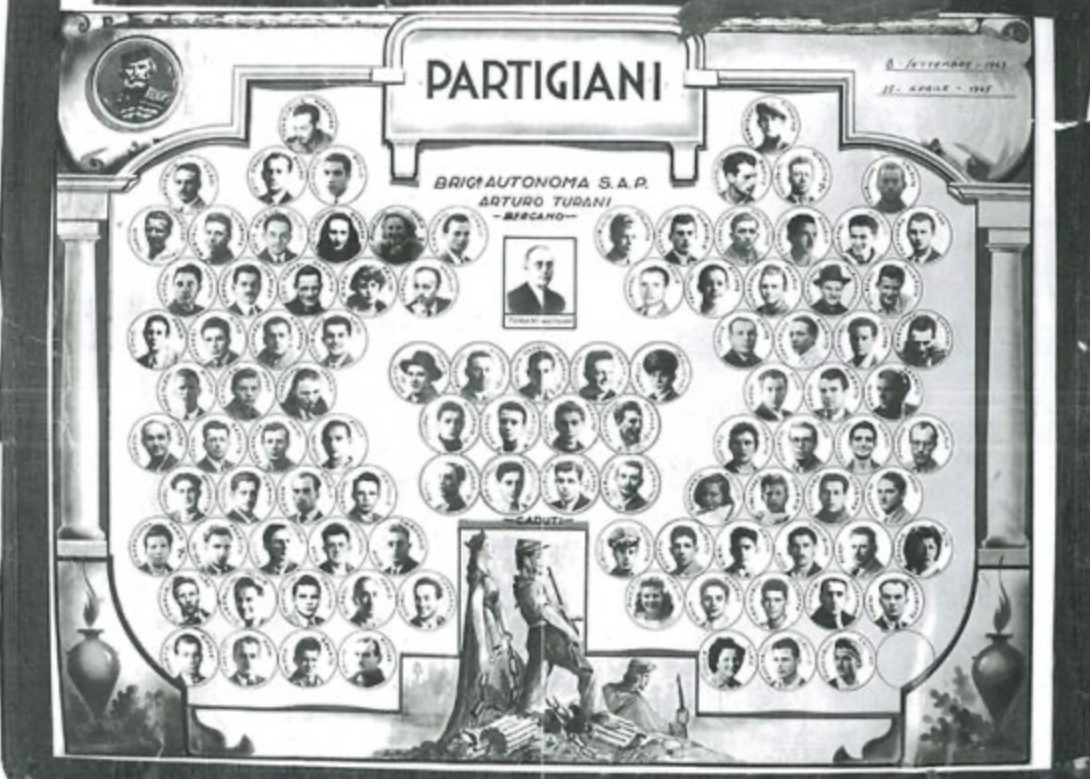
This place testifies to the presence of Resistance formations in Bergamo. In particular, the Turani Group takes its name from Arturo Turani, a central figure in the first organized resistance formation in the city, initially known as the Matteotti Brigade. Made up mostly of young people, it operated in the heart of Via Pignolo and played a key role in the clandestine struggle: recovering weapons and ammunition, which were also essential for other partisan groups, distributing anti-fascist press, maintaining connections with groups active in the mountains and in the countryside, and supporting escaped prisoners and persecuted people through forged documents and escape routes to Switzerland. However, the group’s activity was also marked by a certain organizational naivety, typical of the very first Resistance formations that spontaneously arose after 8 September. The choice to hold meetings in the very center of Bergamo, in an area strictly controlled by Fascist authorities, proved extremely risky. In a context saturated with denunciations and infiltrations, this spontaneity, driven by enthusiasm and courage but lacking clandestine experience, made the group particularly vulnerable. Its activity was intense but short-lived. Between the end of 1943 and the beginning of 1944, the group was heavily struck due to infiltration and betrayal. Arrests led to the dismantling of the group and the execution of Arturo Turani, Giuseppe Sporchia, and Cesare Consonni, while other members were imprisoned or managed to escape. The fate of the Turani Group was not isolated: many of the first urban partisan formations, born out of immediate indignation and desire to react, suffered similar blows. The Betty Ambiveri formation was also crushed in its early months of activity. In this initial phase, armed anti-fascism was characterized by generous but fragile spontaneity, lacking consolidated structures and adequate security measures, which made it vulnerable to a well-organized repression system. Despite the repression, the sacrifice of its protagonists helped preserve other cells of the city’s Resistance, which managed to survive and continue the struggle until Liberation.
Although not directly part of the Turani Group, Arturo Turani played a fundamental role in the Bergamo Resistance. Born in Bergamo on 29 September 1888, an architect by profession, after 8 September 1943 he actively joined the War of Liberation, helping organize an early partisan nucleus of the Matteotti Brigade, which after his death would be renamed the “Arturo Turani” Brigade in his honor. On 15 November 1943, he was arrested in his home in Via Pignolo during a clandestine meeting. Handed over to German authorities, he was tried by a German military court on charges of partisan activity and weapons concealment and sentenced to death. He was executed on 23 March 1944 at the “Seriate” barracks in Bergamo. His body was later buried in a field in Grumello del Piano; in August of the same year it was accidentally discovered next to that of his fellow fighter Giuseppe Sporchia and temporarily buried in the Grumello cemetery. Arturo Turani’s sacrifice is symbolically linked to the Turani Group and other partisan groups active in the city: both contributed, each in their own way, to organizing the Resistance and protecting partisan cells until Liberation. On the sixtieth anniversary of Liberation, the city of Bergamo honored his memory with a plaque at the place of his arrest, as a testimony to his commitment to freedom.
🎧 Audio Reading
Multimedia content
Sources
Bibliographic sources
- Mario Pelliccioli, Memory Itineraries. A journey in Bergamo between fascism, German occupation and Resistance, Moltefedi Achille Grandi Editore, Bergamo 2023
- Angelo Bendotti, Brief was the life of the Turani group, in Banditen. Men and women in the Bergamo Resistance, Il filo di Arianna, Bergamo 2015, pp. 137–154.
- The Nazi-fascist attempt to crush the Resistance in its early stages, ISREC Bergamo, Memory Urban project
- ANPI biography of Arturo Turani
Multimedia sources
- Image 1: Project photographic archive, class 5IG ITIS P. Paleocapa
- Image 2: Memory Urban project, ISREC Bergamo