Historical Context
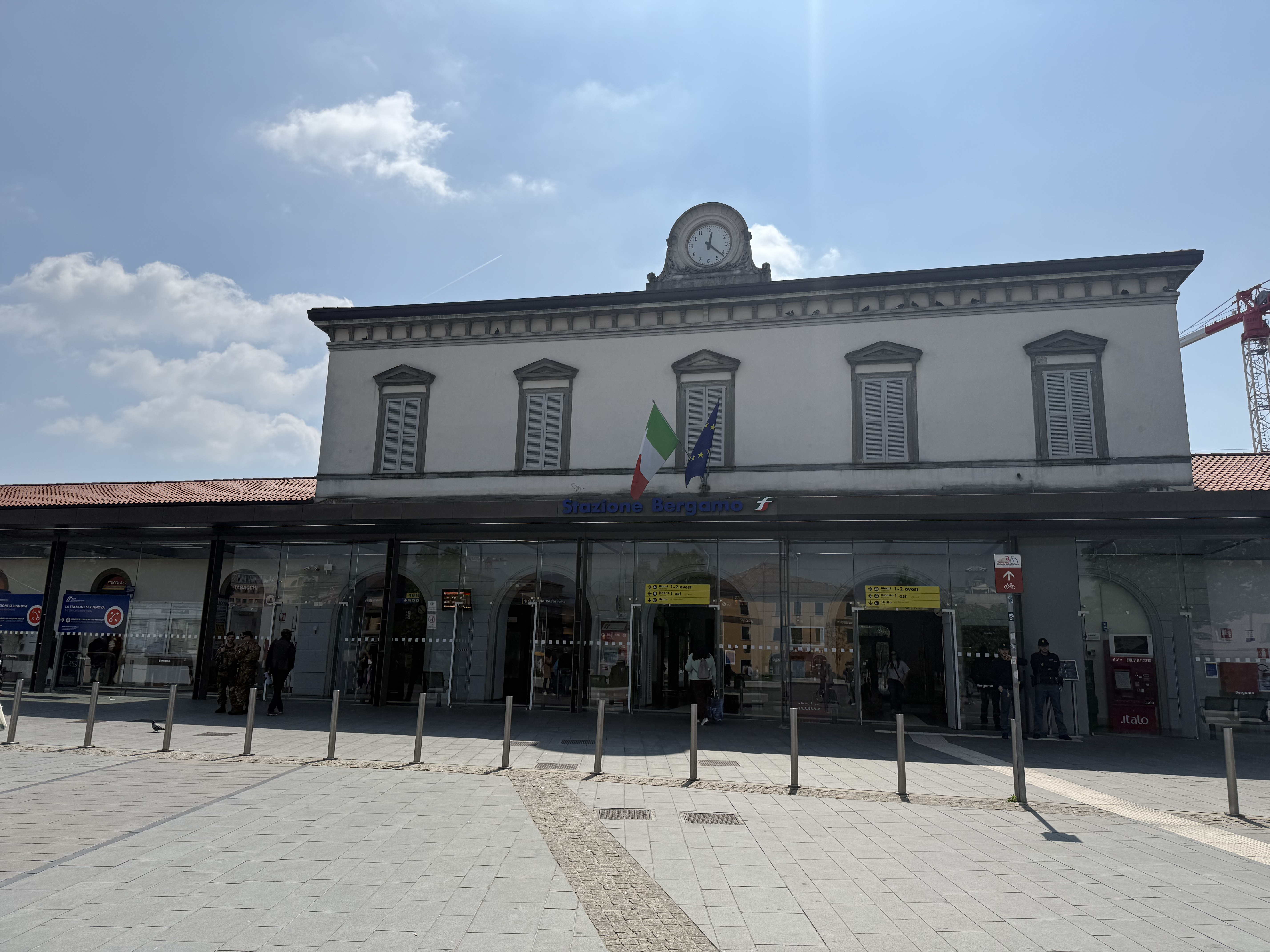
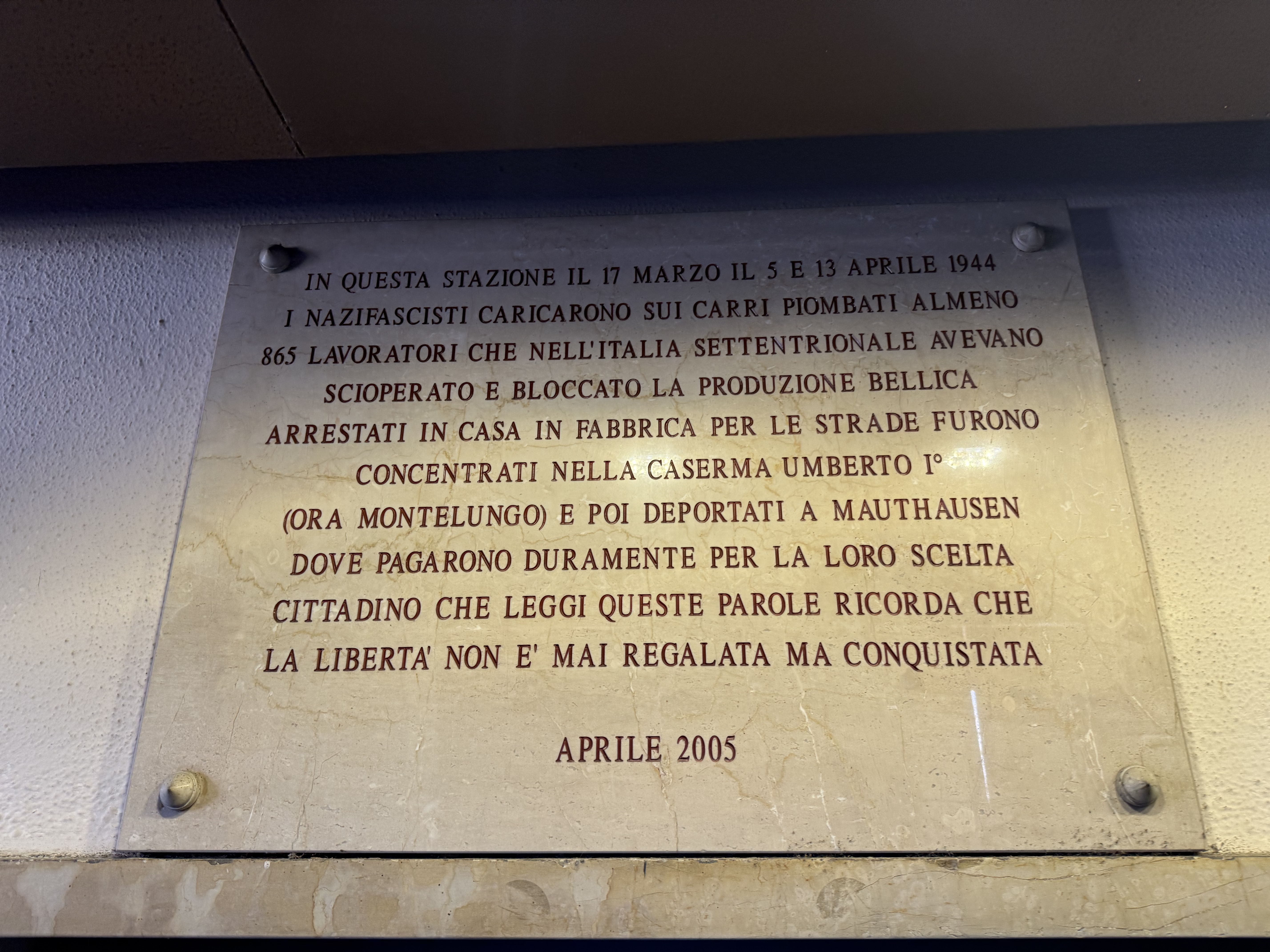
We are at the Bergamo railway station, a crucial hub during the Nazi-Fascist occupation (1943–1945). This place, like many other Italian stations, was the scene of one of the most tragic events of the Resistance: from here, cattle cars departed that deported around 900 people to Nazi concentration camps, mostly workers from Milan. The deportation was a consequence of the general strikes of March 1944, a massive workers’ mobilization in Northern Italy that arose to demand better living conditions and to oppose both the Italian Social Republic and the German occupiers in that terrible historical context.
The context refers to the period immediately following the Armistice of September 8, 1943, which marked Italy’s exit from World War II, after Mussolini’s fall on July 25, 1943. The Germans, once allies, became occupiers, enforcing harsh control over Central and Northern Italy (the Italian Social Republic, or “Salò Republic,” a Nazi puppet state). The South, after the Allied landing in Sicily, was gradually liberated. Italy was thus split in two, with the North becoming the stage of civil war, German military occupation, and Resistance.
The strikers, aware of the risk of arrest and deportation, challenged the regime and suffered brutal repression. Transports were often organized from stations like this one, where deportees were crammed in inhumane conditions for a journey into the unknown, marked by hunger, cold, and fear.
Why it is a place of memory
This station is a place of memory because it embodies the transition from the struggle for dignity at work to the tragedy of deportation. It is not just a geographical departure point, but a symbol of the violence suffered by a civilian community that chose to resist. Deportation passed through our very streets, before everyone’s eyes, and perhaps many looked the other way. This is also reflected in how late this memory was honored: the plaque commemorating the 900 deportees who left from here was installed only in 2005, sixty years after the end of the war. A long and heavy silence, revealing the difficulty of a community in coming to terms with its past. Remembering today means honoring their sacrifice and keeping alive the awareness of the values they fought for: freedom, social justice, and human dignity against oppression. The plaque reminds us of a civic duty that goes beyond history: “We must not execute anyone, we must set an example,” as recalled by a survivor, emphasizing that from suffering came a choice of justice, not revenge. In a time when rights and democracy may seem taken for granted, this place challenges us to reflect on the price paid for them, on past indifference, and on the importance of defending them every day.
"Our duty is not to forget. We must not execute anyone, we must set an example"
Testimony of an anonymous deportee, from Streikertransport; Political deportation in the industrial area of Sesto San Giovanni, Giuseppe Valota, 2007.Multimedia Content
Sources
Bibliographic Sources
- Mario Pelliccioli, Memory Routes. A path in Bergamo through fascism, German occupation and Resistance, Moltefedi Achille Grandi Editore, Bergamo 2023
- Giuseppe Valota, Streikertransport. Political deportation in the industrial area of Sesto San Giovanni, Guerini e Associati, Milan 2007
- Sandro Peli, Working class and general strike (March 1–8) in The Resistance in Italy: history and critique, Einaudi, Turin 2004
Multimedia Sources
- Images 1 and 2: Project photo archive, class 5IG Itis P. Paleocapa
- Video: Bergamo, the Montelungo deportees and the duty of dissent, Bergamo News